

Beyond Dambusting: No.617 Squadron after the "Dambuster" raids
Published the 24Th June 2025
planes
There can be no more famous squadron in the RAF than No. 617 Sqn. Even to the average person in the street who may not know the unit’s designation, they’ll know the squadron by its nickname: the “Dambusters.”
Chastise
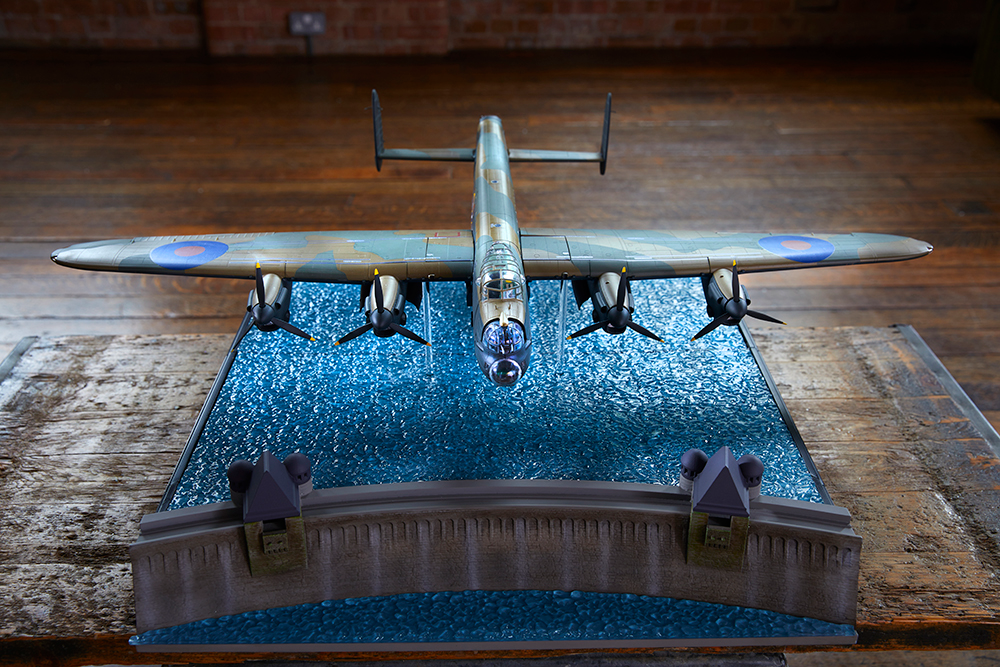
The squadron formed on 21 March 1943 specifically to train on the use of the rotating “Upkeep” mine for the attack on several dams in the Ruhr, the industrial heartland of Nazi Germany. The Squadron flew heavily modified Avro Lancasters specifically adapted to carry Barnes Wallis’ “bouncing bomb” and to allow their use in the precision bombing of the dams. Led by Wing Commander Guy Gibson, Operation Chastise, as the attack was known, was flown on the night of 16/17 May 1943. Despite the hype that followed, the raid attaining legendary status, the results have been argued over ever since. Whilst two dams were breached and two more damaged, of the 19 Lancasters used in the attack, eight were shot down for the loss of 53 aircrew. The resulting flooding killed 1,600 civilians, around a thousand of which were Russian slave labourers who were being used in the area. The raids did impact German industry in the Ruhr, cutting electrical power for two weeks and greatly reducing coal production. However, after World War II, in his book Inside the Third Reich, Nazi Germany’s head of armament production, Albert Speer, expressed surprise that the British did not follow up on Chastise, hampering the rebuilding of the dams and placing further stress on German industry (he expressed similar surprise following the US 8th Air Force’s attacks on the ball-bearing and aircraft factories at Regensburg and Schweinfurt, which did a great deal of damage and would have done a great deal more if there had been further raids; he was, perhaps, unaware of the serious losses the US bombers suffered during the raids due to lack of fighter escort).
It’s also perhaps unsurprising that the head of RAF Bomber Command, Sir Arthur “Bomber” Harris thought the whole raid a waste of time and resources. He would have rather kept the unmodified Lancasters busy as part of his strategic carpet-bombing campaign against German cities, which he singularly believed would bring the Nazis to their knees. Bear in mind, this was the man who thought the whole notion of D-Day was also a waste of effort; in his myopic view, you didn’t need to invade France to beat Germany; you just pounded them into submission.
the baedeker raids
As well as the industrial inconvenience to Nazi Germany’s manufacturing programmes, Chastise did have, for the British, other positive outcomes. The audacity and skill of the raids and the undoubted bravery of aircrews flying such a dangerous mission, helped boost British morale when the country was on the receiving end of another German Blitz.
The Baedeker raids were named after the German travel guides of the 1930s. A member of the Nazi German Foreign Office had suggested the use of the Baedeker Guide to Great Britain to pick targets of historic and cultural value to the British – anything “marked with three stars”. This greatly upset the Nazi leadership who keen to make it clear that the raids were in retaliation for the devastation wrought on the historic Hanseatic towns of Lübeck and Rostock by the RAF in the spring of 1942. Rostock had ties to aircraft production, but the value of both towns was far more cultural, each home to many beautiful historic buildings. Their destruction, much more to “Bomber” Harris’ taste, shocked many Germans. The outraged Nazi leaders demanded retaliation but wanted to make it clear that the revenge bombing were a direct and proportional response to the British attacks. As such, using the Baedeker guides to choose targets in the UK flew in the face of the Nazi effort to make it clear they were not using choosing targets along the same lines as the RAF. Hitler and Goebbels were furious, giving the British an unexpected propaganda coup. In 1943, the British published a Bomber’s Baedeker, a guide to targets in Germany that was very much giving two fingers to the Nazis.
The raids themselves, on historic British towns such Bath, Canterbury, Exeter, Norwich and York, were more a nuisance, and while inflicting more than 1,600 casualties, they also diverted vital resource from hard-pressed German forces in Russia and North Africa. However, for the British people, yet another Blitz no matter how small (and the Baedeker raids caused far less damage than the Blitz of 1940/41), added to the exhaustion caused by nearly four years of war. As such, the Dambuster Raids, which received extensive coverage in the Allied press, was something of a salve.
the earthquake bombs
Another upshot of Chastise was “Bomber” Harris’ approval for the development of Barnes Wallis’ “earthquake bombs”. At the time, the largest bomb in use with the RAF was 12,000lb (5,443kg) High-Capacity bomb, known as the cookie or “blockbuster”. It was essentially an ungainly cylinder with poor aerodynamic properties and as such not very accurate. As part of Harris’ mass bombing campaigns, the cookie was used to blow the roofs off buildings, opening them up to the incendiaries that followed. The cookies were not required to be subtle but Chastise made it clear that there were occasions when more precise weapons were needed.
Between 14-16 September, No. 617 Sqn carried out Operation Garlic. Following Chastise, Guy Gibson was no longer in command of the squadron, having accrued enough combat flying hours that he was no longer required to fly sorties. Instead, he’d become some of a celebrity and a poster boy for the RAF, his role taken over by Wing Commander George Walton Holden. Holden was to lead the raid against the aqueduct over the Dortmund-Ems Canal, a waterway vital to German industry. The plan was for eight 617 Lancasters to drop cookies on the canal at night in the hope it would drop the aqueduct and block the canal. The bombers would be supported by flak-suppressing Mosquitoes.
The first attempt was made on the night of 14/15 September, but the aircraft were recalled because of thick fog. One of the Lancasters was lost over the North Sea after apparently colliding with a Mosquito returning from a different raid. All the crew was lost. The mission was flown again the following night. Poor visibility over the target combined with the poor accuracy of the cookies meant the aqueduct was largely undamaged while No. 617 Sqn lost another five aircraft, with most of the crews killed, including Wing Commander Holden.
Following Garlic, the need for more accurate heavy weapons became apparent. Although No. 617 had continued to fly other specialist missions after Chastise, including Operation Garlic, the squadron had had scant success and was close to being disbanded. Instead, after Garlic, replacement crews and aircraft arrived, and the squadron was rested, while the Lancasters were fitted with the new SABS – Stabilised Automatic Bomb Sights. The SABS took into account aircraft height and speed, wind speed and drift, temperature and barometric pressure, thereby greatly increasing bombing accuracy (although it could only be used effectively when the target was clearly visible). No. 617 began undertaking raids against targets such as the Antheor Viaduct in France in November 1943, where the SABS managed to place bombs very close to the target but failed to drop it. Another attack in February the following year produced similar results, but attacks against larger targets such as factories were spectacularly successful. The Gnome-Rhône engine factory in Limoges and the railyard at Juvisy were both devastated.
Such results reinforced the need for increased accuracy for hitting such precision targets as viaducts and bridges using one aircraft instead of risking more bombers to saturate the target. Barnes Wallis had been addressing this problem. He had developed a more streamlined ergo more accurate weapon, the Tallyboy bomb. Like the HC cookie, it still weighed 12,000lb, but was 21ft (6.4m) long and fitted with four tailfins that spun the weapon in flight to keep it stable as it fell. Initially, Britain’s Air Ministry, responsible for the running the RAF, were unwilling to waste a single aircraft to carry a single bomb but slowly relented as the war progressed. With its blessing and that of “Bomber Harris”, development on the Tallboy kicked into high gear in 1942, when it became apparent that the Nazis were building massively reinforced concrete pens along the French coast to house their E-boats and U-boats. The bomb was constructed from high-tensile steel to penetrate its target before exploding. To help ensure this, the Tallboy was fitted with three long-delay fuses, giving them a triple redundancy – even if two failed, one would ensure detonation. Curiously, at first, no official contract was issued by the Ministry of Defence to buy Tallboys, the RAF receiving them direct from the manufacturers, Vickers. An official order followed only once the weapon had proved its worth.
The Tallboy entered service in June 1944. Such a massive weapon required specialist aircraft to carry it, and, in the Spring of 1944, No. 617 began receiving the Lancaster Mk. 1 (Special). Like the Provisioning Lancasters that carried the Upkeep ‘bouncing bombs’, the Mk. 1s had been stripped of a great deal of equipment, including most of its armament, to save weight. The bomber had to travel at a steady speed of 170mph (270km/h) at a height of 18,000ft (5,500m) to ensure the Tallboy reached its terminal velocity of 750mph (1,207km/h) – supersonic speeds that added to its penetrability.
First combat use of the Tallboy was on 9 June 1944. No.617 Sqn dropped 19 ‘earthquakes’ on the railway tunnel at Saumar in France. It was believed that the rail line that passed through the tunnel was being used to bring German reinforcements to Normandy following D-Day on the 6 June. However, the railway tunnel was inside a hill deep enough to be thought impregnable to conventional weapons. The attack was at night, the hill illuminated by pathfinder Mosquitoes that now flew as part of 617. They were led by the squadron’s legendary CO, Wg Cdr Leonard Cheshire, his Mossies successfully lighting up the hill and, along with the SABS, allowing accurate bombing of the target. The Tallboys devastated the hill, leaving craters some 100ft (30m) wide and 70ft (21m) deep; one of the bombs actually penetrated into the tunnel before exploding, collapsing the tunnel and triggering an avalanche of debris that covered the rail line. In response to the attack, the Germans forced the inhabitants of Saumar to clear the debris from the tunnel, an undertaking that took nearly three weeks. However, the German reinforcements, the 17. SS-Panzergrenadier-Division, were held up for a considerable time. The bombing raid, joined by sabotage operations by the French Resistance, forced the division to travel by road, a very dangerous proposition at the time for German motor transport.
the tirpitz
More Tallboy raids followed, with attacks on the concrete pens housing E-boats at Le Havre and strikes against the underground storage bunkers for V-1 flying bombs. Soon after, a campaign was launched to destroy the German battleship Tirpitz. Despite the Allies’ command of the sea at this stage of WWII, the warship still posed a considerable threat. It had been hounded constantly and was now holed up in a Norwegian fjord, left crippled by daring attacks using British X-craft midget submarines and air attacks by Royal Navy carrier-based aircraft.
The first attack by No. 617 Sqn against Tirpitz took place on 15 September 1944 as part of Operation Paravane. Twenty 617 Lancasters were joined by 18 conventional Lancs from No. IX Sqn, carrying a mix of Tallboys and 500lb (226.7kg) “Johnny Walker” anti-shipping mines. Due to the distances involved, the plan was for the bomber force to conduct its mission then fly on to airfields in Russia. However, the Germans laid a heavy smokescreen around Tirpitz and it was unclear if the ship had been hit. Many aircraft could not see the target and flew on to the Soviet Union still carrying their bombloads (standing orders at the time forbade the bomber crews from jettisoning Tallboys as they were considered too expensive to be casually dropped like conventional bombs).
However, unbeknownst to the British, one of the Tallboys had hit the Tirpitz, causing serious damage to the ship’s bow. The Kriegsmarine – the German Navy – concluded that the ship was no longer seaworthy so the decision was made to move her to Tromsö, where the ship would be converted into a coastal defence battery. In doing so, the Germans moved the Tirpitz closer to the British bombers.
After the battleship was spotted in its new lair, Lancs from Nos. IX and 617 Sqns were moved to RAF Lossiemouth in Scotland. Forty bombers, 20 from each squadron, launched an attack on the morning of 29 October, but none of the 32 Tallboys dropped hit the ship. However, on 12 November, Operation Catechism dispatched 32 Lancasters from the two British squadrons. The Tirpitz used its huge main guns to disperse the attacking force but nearby Luftwaffe units failed to capitalise on this, their fighters remaining on the ground despite pleas from the German Navy for help (it transpired that poor communications between navy and air force meant the calls for help went largely unheard).
With only ground fire to contend with, the Lancasters set about the battleship, scoring two direct hits with Tallboys; a third exploded close by. Other bombs exploded in the water around Tirpitz, destroying much of the sandbank that had been erected underwater around the battleship to prevent it capsizing. However, 20 minutes after the attack had begun, damage from the various hits led the ship to flood, and that’s exactly what happened, the Tirpitz listing over until she turned turtle. Although exact numbers aren’t clear, around a thousand of the ship’s crew were killed. Eighty-two men were trapped inside and had to be cut free from the upturned hull.
No. 617 Sqn had returned to the Dortmund-Ems Canal on the night of 23/24 September 1944. This time, they were carrying Tallboys and this time, the huge blasts from the bombs lived up to the weapons’ ‘earthquake’ sobriquet, blocking the canal with rubble. It would remain closed for the rest of the war. By 1945, 617 was using Tallboys to attack U-boat pens and other precision targets such the Bielefeld Viaduct in Germany, usually in the company of No. IX Sqn Lancs. They were also now carrying an even-larger bomb: the monster 22,000lb (10,000kg) Grand Slam.
the grand slam
The Bielefeld Viaduct posed an unusual problem for the bombers. It was surrounded by marshy ground that absorbed the force of the exploding Tallboys. Even though the bombs impacted close to the target, the marshes greatly reduced their effectiveness, and it was decided to try the Tallboy’s big brother.
The Grand Slam has been introduced into service in 1945 to take on targets too tough even for the Tallboy. To carry the giant weapon required further modifications to the Lancaster Mk. 1s, resulting in the B 1 (Special), 32 of which were produced. They were fitted with more powerful Merlins and greatly strengthened undercarriage, and like the Tallboy-carrying Mk. 1s, had an extended, doorless bomb bay equipped with a chain mechanism to hold and release the Grand Slam. The massive weight of the bomb made the B 1s very sluggish in the air, pilots being advised to avoid even minor manoeuvres. The bomb also created additional problems should the aircraft be forced to return still carrying its payload. It was found that the runway at 617’s base, RAF Woodhall Spa, was too short to land a fully-loaded B 1, so the fully-laden bomber was required to use the longer runway at RAF Carnaby, an airfield designed to accommodate crippled British and American bombers making emergency landings.
The first use of the Grand Slam came on 13 March 1945 when, following one aborted attack on the 9th, Lancs from Nos. IX and 617 Sqns attacked the Bielefeld Viaduct. Two of 617’s aircraft were carrying Grand Slams and managed to successfully hit the target, bringing down part of the viaduct and weakening other sections enough that they could be finished off by Tallyboys carried by the accompanying Lancs. By VE Day, 42 Grand Slams had been dropped, destroying other viaducts and hardened U-boat pens in Germany. By the time of the German surrender, No. 617 Sqn had flown 1,599 sorties for the loss of 32 aircraft.
post-war
Following the end of the war in Europe, 617 was readied for service in the anticipated invasion of Japan. Repainted with white dorsal and black ventral surfaces, 617 joined No. IX Sqn in heading to India as part of ‘Tiger Force’, the RAF bomber fleet intended to help soften up Japan prior to invasion. However, events overtook them, and the war ended without the need for invasion, 617 returning to its British base at RAF Binbrook.
The squadron joined the Jet Age in 1952 when it transitioned to the English Electric Canberra, taking their new bombers into action during the Malayan Emergency for four months that same year. The Canberras flew alongside the Avro Lincoln, an updated Lancaster and Britain’s last piston-engined bomber.
In May 1958, 617 became part of the UK’s V-bomber fleet equipped with nuclear weapons and intended to fight World War III should the Cold War become explosively superheated. Flying another iconic Avro aircraft, the Vulcan, it flew as part of Britain’s nuclear deterrent until the 1970s when 617 took on a conventional bombing role intended to support NATO in Central Europe in the event of a Warsaw Pact invasion. The squadron re-equipped with the Panavia Tornado GR. 1 in 1983 and saw deployments to the Middle East on several occasion, the first in August 1990 in response to the Iraqi invasion of Kuwait. From 2003, 617 flew operational missions over Iraq and Afghanistan.
In 2016, 617 began conversion to the Lockheed Martin F-35B Lightning II, operating out of RAF Marham in Norfolk. However, although still part of the RAF, the squadron currently flies detachments from the Royal Navy’s two aircraft carriers, a new role for a squadron that has seen so many changes in its lifetime.