
Published the 24Th aug 2026
history
After World War II had ended, General Dwight D. Eisenhower, Supreme Allied Commander in Europe, was asked which weapons he felt had contributed most to the Allied victory. He chose the C-47 Dakota, the jeep, the DUKW amphibious transport, the bazooka and the atomic bomb.
Many people might find some, if not most of these choices curious. The atomic bomb would seem to go without saying but the others really aren’t very glamorous. Most had, at best, minor defensive armament and could even really be considered weapons. Yet he was choosing them as a general who valued the importance of logistics, as one of the architects of the D-Day landings – the greatest amphibious landing in history – and as one of the commanders who moved his pieces on the great strategic chess board of a sprawling conflict fought over vast areas – the deserts of North Africa, the plains of western Europe, the endless Russian steppes. Ask anyone to describe WWI and it’s probably a safe bet they’ll talk of the funeral mires of trench warfare on the Western Front. But while this sort of stultifying stagnation did occasionally occur, the clash of arms in WWII was often manoeuvre warfare – the rapid deployment of forces, often mechanised, the kinetic advances of armoured columns supported by powerful air forces. Nowhere was this sort of fighting better exemplified than by the German Blitzkrieg.
The French were given a salutary lesson in this new form of warfare in May 1940. Philosophically still under the influence of the 1914-18 conflict, France had decided to rely on a wall of concrete to hold back any threat from the north i.e. the Germans. The Maginot Line was a line of emplacements and pillboxes stretching from the Channel Coast along the borders with Belgium, Luxemburg and Germany, where the French believed any attack would fall. The heavy guns were fixed north and east reflecting the belief that any assault would break like a wave against these concrete headlands. But while such a powerful statement in this sort of military philosophy may have stood up to infantry waves at Verdun or the Somme, what do they do against the slashing blades of the Blitzkrieg? To add insult to injury, the Germans cheated, swinging around behind the Maginot Line, leaving all those guns pointing in the wrong direction.
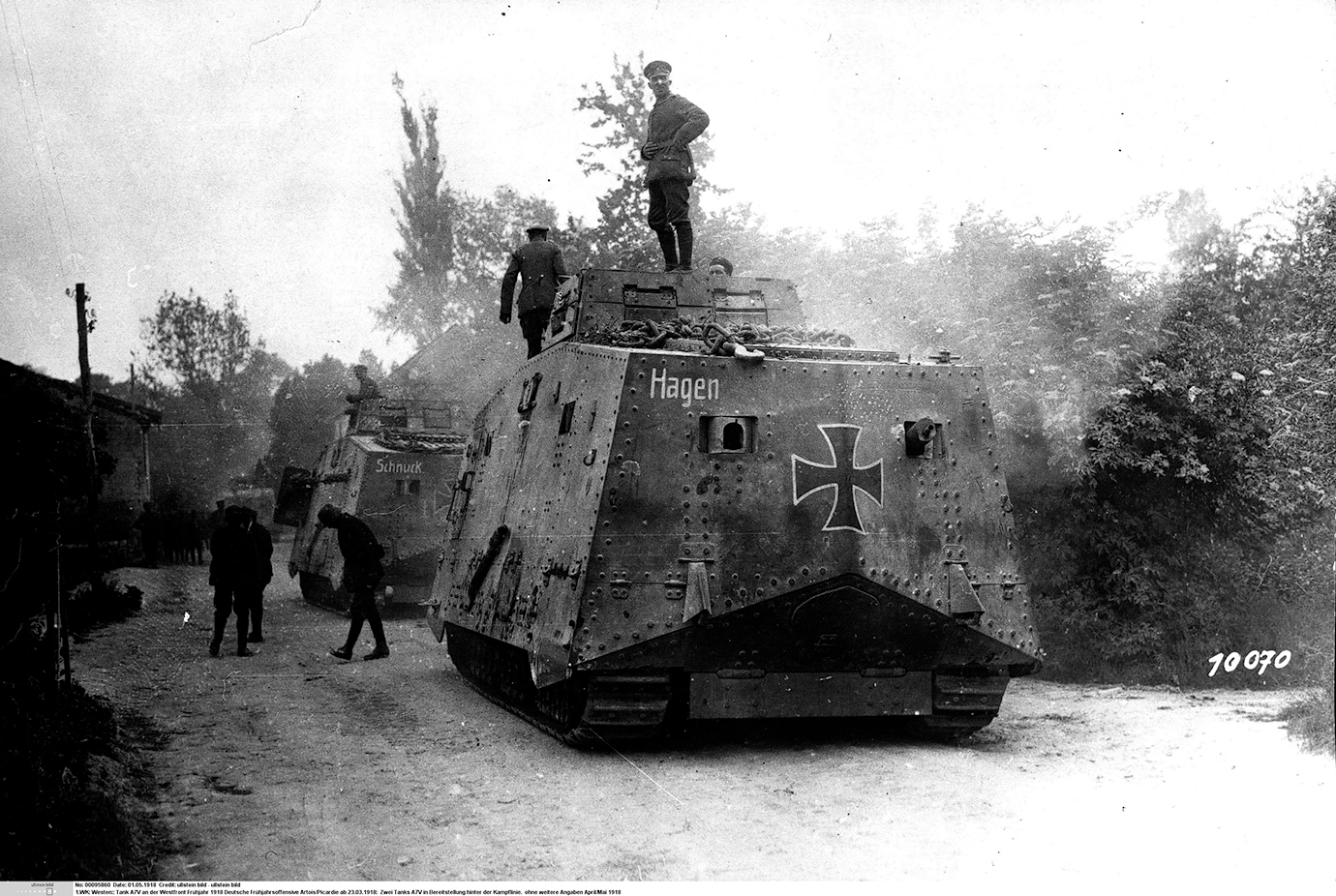
Years of peace and austerity and fear of another conflict meant most European armed forces were under-equipped with few resources and outmoded or obsolete orders of battle. The tank, originally conceived as a war-winning weapon destined to break the deadlock on the Western Front, had failed to fully live up to its potential. Hampered by technical problems and a lack of imagination on the part of its users, tanks were seen by many as just an infantry support weapon. They travelled about as fast as a soldier could walk, broke down regularly and had trouble traversing the battlefields of Flanders and France.
By the time WWII erupted, British and French armour still bore similarities to those early tanks and their deployment suggested not much had changed since 1916, when Britain had been the first to deploy tanks in combat. The British Army used two types of tank: the infantry tank, slow and heavily armoured, intended to keep with pace with infantry while providing them with fire support; and the cruiser tank, a reflection that the British Army had never really gotten over the loss of its horse cavalry.
The cruiser tank types were fast and light, their speed and mobility seemingly ideal for reconnaissance and exploiting breakouts on the battlefield – much like horse cavalry. The German Army saw things differently. It envisaged the tank as a weapon in and of itself. In the run-up to the start of WWII, studies and exercises had led to infantry, armour, artillery and aircraft being used as a combined force. Tactics called for tank forces to spearhead attacks, supported by mechanised infantry mounted on armoured personnel carriers. German tanks such as the Panzer III and Panzer IV also had a major advantage over their potential opponents: they were well armed.
The principals of tank design balance three prerequisites: speed, armour, armament, but in the 1930s, the designers preparing to fight WWII found themselves in agreement with Meatloaf – that two outta three ain’t bad. Technology at the time made perfecting a perfect blend of all nigh on impossible. Usually, one of the design facets had to be sacrificed in favour of another. The British went one better; their tanks usually sacrificed two.
Probably the best tank in the British Army at the start of WWII was the Matilda. Tough and well-armoured, it was also an infantry tank, so was slow. It was, also, like all British tanks at this time, massively under-armed. The Matilda and the various cruiser tanks of the day were armed with a 2-ponder cannon. It was often referred to as the ‘peashooter,’ by crews who felt it was about as much use as the schoolboy nuisance weapon when used in combat against the rugged panzers.
By contrast, the Panzers III and IV were armed with powerful main armaments – 5cm and 7.5cm cannons. The thick armour of the Matilda made it hard for even these potent weapons to score a killing blow unless at close range, but the panzers could make short work of the light cruiser tanks.
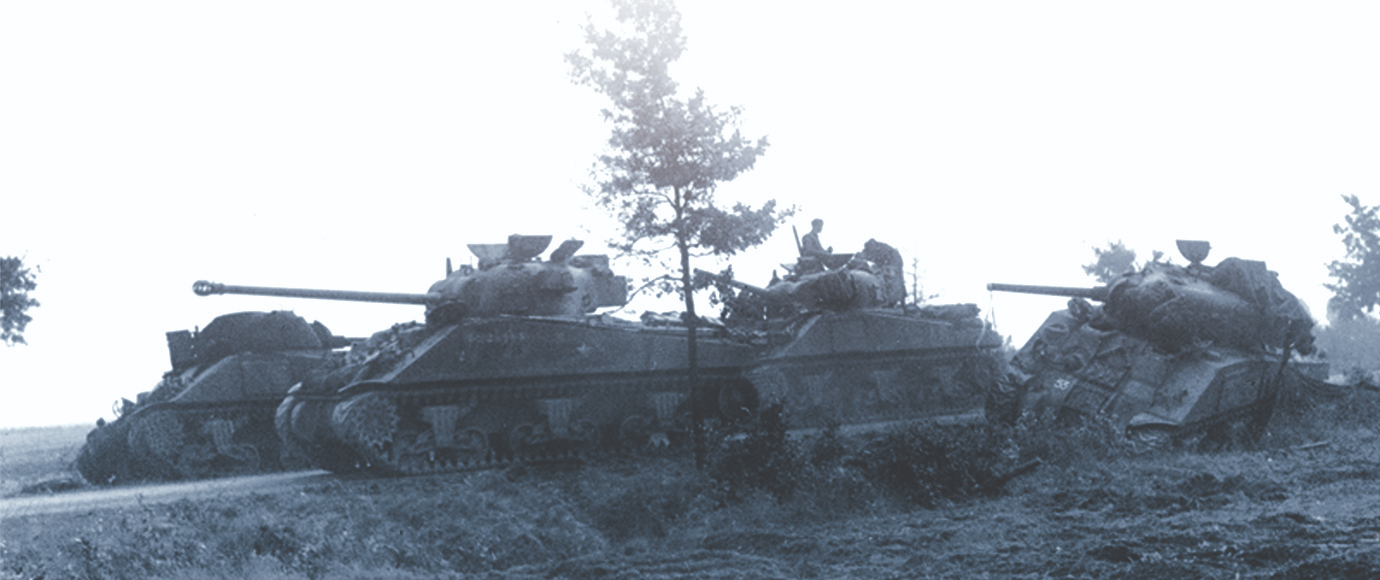
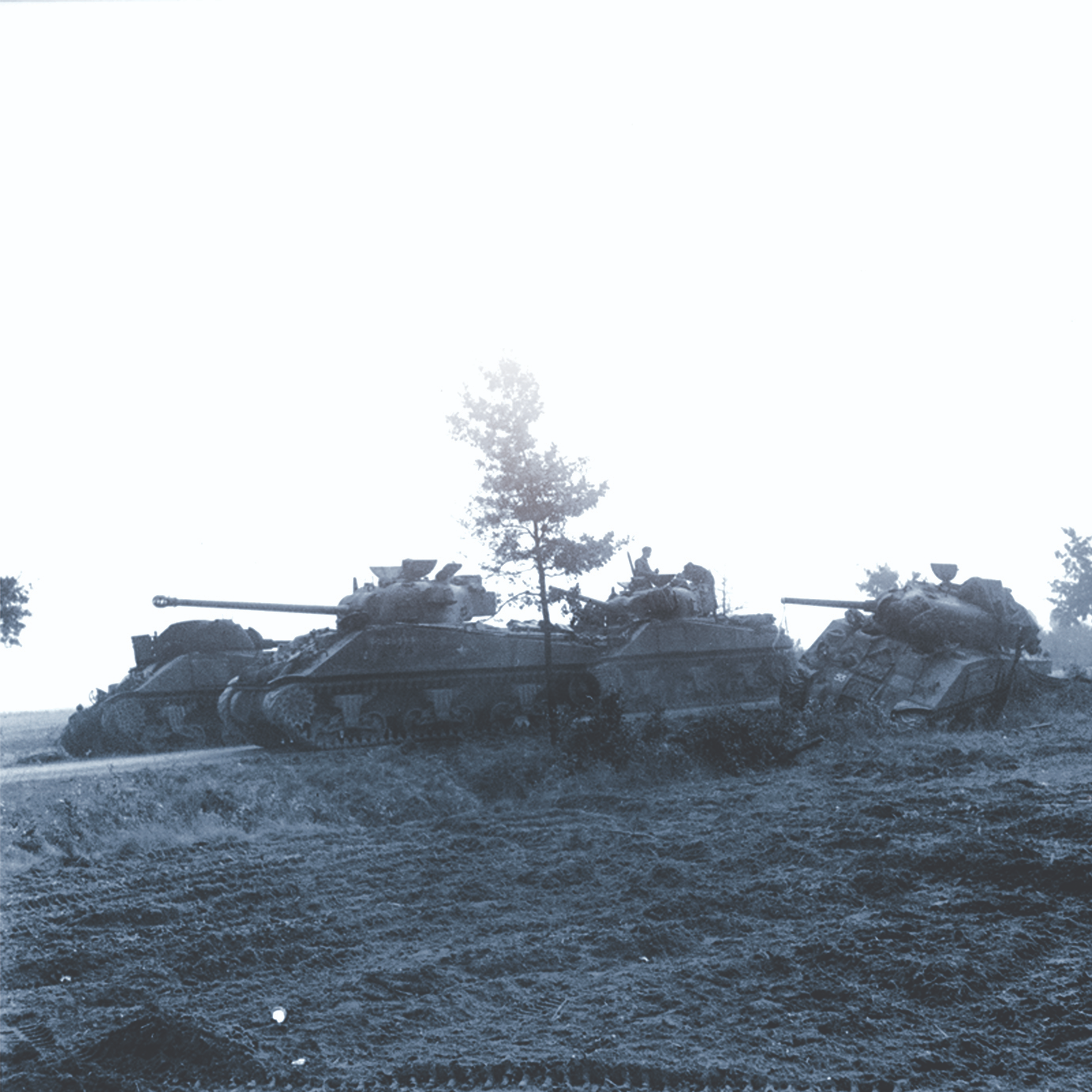
Despite the brutal lessons learned from the early battle against German armour, British tank development was still slow on the uptake, and it wasn’t really until 1943 that Britain’s armoured formation received what might be considered a ‘modern tank’, and even then, it was American: the venerable M4 Sherman.
The Sherman came close to meeting all the criteria of an ideal tank. Having learned various important lessons from tank battles early in WWII, its design focused on ease of use and maintenance; it was also intended to embrace America’s industrial philosophies: it would be easy to mass produce. The USA’s policy of Total War – a concept already readily embraced by Britain but strangely ignored by Nazi Germany until much later in the war – required the country’s entire economy to go onto a war footing. As such, car and train manufacturers such as Ford and Pullman began churning out thousands of tanks and aircraft. By July 1945, when production of the Sherman ended, more than 49,000 had been produced. Many of these went to American allies, particularly Britain.
British tank crews were initially enthusiastic about the Sherman. Here at last was a modern tank fitted with a useful 76mm gun that could at last engage the Panzers III and IV on equal terms. However, by 1943, a new generation of German tanks and assault guns were arriving and fitted with the ‘eighty-eight’ – the dreaded 88mm cannon.
The eighty-eight had originally been designed as an anti-aircraft gun but as early as 1940, it had been found to be an excellent anti-tank weapon and versions of the cannon were fitted to the Tiger I tank. The Tiger became operational in 1942, joined in mid-1943 by the Panzer V – the ‘Panther’ – armed with a powerful 75mm cannon. Both tanks proved more than a match for the Sherman, whose armour could not defeat the German guns. British crews took to calling Shermans the ‘Ronson’ after the famous cigarette lighter, because of the tank’s propensity to ‘brew up’ when hit, bursting into flames.
Despite the Sherman’s vulnerability, it had one serious advantage: numbers. The industrial might of America – surely one of the most important factors in the Allied victory – meant losses could easily be replaced, along with a steady flow of well-trained replacement crews. Compare the 49,000 Shermans built to the production numbers of German armour. The most numerous was the Stug III assault gun; 10,000 were built throughout the war while 6,000 Panthers were manufactured. Only 1,300 Tiger Is entered service.
The disparity in numbers was not because of America’s industrial strength. The Sherman was relatively cheap and simple. The Tiger I and the Panther were not. The latter in particular was notorious as a maintenance nightmare when it first entered service, exacerbating the complexity of German armour with the need for long hours of maintenance to keep the tanks in the field. This was further compounded by Hitler’s obsession with the tip of the spear which meant the importance of logistics was often overlooked. This was brought home sharply to the German Army during the long and agonising campaigns on the Eastern Front.
Hitler and his commanders believed the invasion of the Soviet Union would be over quickly so planned to do a great deal with not much, assuming German superiority, mobility and firepower would overwhelm the peasant Russian forces. But as the Russians traded time and territory, the Germans found their already flimsy logistical lines being stretched ever thinner. When the vaunted Wehrmacht ran out of steam at the gates of Moscow in December 1941, its subsequent retreat became increasingly reliant on horses and mules. Not much had changed since 1812 and while Allied tanks may not have been as good as German ones, what did matter when, by 1945 the few remaining Panthers and Tigers were out of spares, fuel and luck. Meanwhile, Eisenhower’s beloved columns of Deuce and Half trucks, jeeps, ‘ducks’ and C-47s were bringing a steady flow of supplies to keep the Allies equipped with everything an army could ever need.
Some six weeks after the start of WWII, the German U-boat U-47 snuck into the Royal Navy’s anchorage at Scapa Flow in the Orkney Islands. Several torpedoes from the sub struck the battleship, HMS Royal Oak, sinking the ship and killing 835 of its 909 crew members. The audacity of the attack caught the Royal Navy off guard, yet it had had some experience with the threat posed by submarines during the First World War. However, the loss of the Royal Oak did nothing to alter the perception that the battleship was still the most prestigious of warships – the Royal Navy’s “Big Stick”. But proponents of the battleship were about to discover that the threat from the air could be more devastating than that from beneath the water.
The Japanese Navy had fully grasped the potential of air power – a fact they demonstrated with elan with the attack on Pearl Harbor. On 10 December 1941, they demonstrated categorically to Britain that its long-held belief in the supremacy of its battleships was now ill-founded. As part of a force of Royal Navy warships intending to stop a Japanese force invading Singapore, the battleship HMS Rodney and battlecruiser HMS Repulse were bombed and torpedoes by Japanese aircraft, sinking both warships and killing hundreds of sailors.
The sinkings, the shock of which reached the very highest levels of the British Government, came just three days after the devasting attack on Pearl Harbor. Yet the Japanese architect of that attack, Admiral Isoroku Yamamoto, was also painfully aware that his aerial strike, whilst a tactical victory, was a strategic failure. His attack may have crippled the US Navy, but the real targets of the attack – the US carriers – were not, by accident (some might say conspiracy) in port and Yamamoto was only too keenly aware that they had riled what he called ‘the sleeping tiger’. The vengeful Americans were quick to take the fight to the Japanese, engaging in the first carrier vs carrier combat at the Battle of the Coral Sea on 4-8 May 1942 – a battle unique in the annals of naval warfare in that it was the first where the opposing fleets never saw each other. The fighting was conducted entirely by aircraft. The fight ended more or less in a draw: both sides lost a carrier.
A month later, the Japanese tried to invade the American-controlled island of Midway, but the glowing confidence of the Imperial Japanese Navy was severely dented when it suffered a disastrous defeat. In a famous six-minute attack, US Navy dive-bombers sunk or crippled three Japanese carriers.
The Americans lost another carrier, but Yamamoto understood the USA could withstand the losses it incurred. Ships sunk were quickly replaced and just as quickly joined by new ones. New aircraft, now superior to those of the Japanese, bedecked a rapidly growing fleet of carriers. Following another devastating defeat at the Mariannas Islands, the shattered remains of the IJN’s air arm decided on extreme measures and thus was born the Kamikaze.
The US was given the full measure of the Kamikaze threat when it invaded Okinawa, the last step on the island chain that led to the Japanese Home Islands. Massive suicide attacks were mounted against the US fleet off Okinawa by Japanese aircraft, resulting in numerous ships being crippled, a few sunk, including several carriers. It’s interesting to note that the US Navy had been joined by a task force of Royal Navy warships including two carriers. American carriers had wooden decks and on those occasions that a Kamikaze managed to penetrate the storm of anti-aircraft fire thrown up by the US fleet and crash into the carriers, these decks proved vulnerable, the attacker smashing through into the hangers below. Crowded with aircraft, fuel, weapons and men, the impacting Kamikaze could trigger catastrophic explosions, which resulted in devastating damage to several carriers. British carriers, meanwhile, had metal flight decks. These made the vessels infernally hot but came to be greatly appreciated when the ships were targeted by Kamikazes. Although the British carriers did sustain some damage, the suicide attacks never penetrated the decks and it became, as was wryly commented at the time, a case of “sweepers man your brooms”.
The real war, though, was psychological. Many Americans, coming from a society so very different to Japan, could not believe that the Kamikaze pilots had not been in some way brainwashed. Meanwhile, combat on Okinawa itself devolved into a primitive hand-to-hand slog, the fanatism of the massively outnumbered, massively outgunned Japanese soldiers bewildering the average American G.I. The battle to take the island proved very costly to the US and once Okinawa was taken, the Allies now faced the terrifying prospect of invading Japan itself. Studies amongst planners suggested the invasion force would face the bitterest of resistance and there was real concern that the American public, after four years of war, might not have the stomach to endure the cost that the invasion would entail.
There has been much argument since 1945 about why America chose to use the atomic bomb and with 80 years of hindsight, it’s easy to see conspiracies and political posturing and warnings to the Soviets. But the bloodshed, the losses, the savagery of the fighting on Okinawa no doubt went a long way in helping President Harry S. Truman make his fateful decision.
Early on 1 September 1939, a pair of Polish P.11 fighters took off from their airfield at Balice, preparing to intercept any German aircraft supporting the invasion of Poland that had begun that morning. However, as they left the runway, they found themselves suddenly in front of several Ju 87 Stukas. The lead Stuka was piloted by Untteroffizier Frank Neubert, who opened fire, hitting one of the P.11, which crashed, killing the pilot. This was probably the first air-to-air victory of WWII.
In some ways this kill was the embodiment of the rapidly accelerating evolution of air combat. The P.11s looked anachronistic, with their fixed undercarriage and high-mounted gull wings. The Ju 87 had both these features although the Stuka’s gull wings were low-mounted and inverted. It was also not a fighter – the air-to-air victory was more happenstance than design – but a dive-bomber aircraft featuring numerous advanced features that enabled its crew to deliver pinpoint attacks. The Stuka’s primary mission was close air support, essentially flying artillery for destroying targets ahead of the tanks at the Blitzkrieg’s spear tip. The aircraft was also fitted with small propellors on the undercarriage that generated a banshee wail when the Stuka began its dive – the infamous ‘Jericho sirens’ intended to terrify those on the receiving end of its attacks (and beloved of Hollywood filmmakers for decades after as the sound effect for any aircraft in a plunging dive). The image of the descending Stuka with its raptor wings and screaming cry became the embodiment of the Nazis’ seemingly unstoppable lightning war.
However, the Stuka itself was soon overtaken by technology. In the opening year of WWII, the Ju-87 had never faced modern fighters flown by well-trained pilots. That changed in the summer of 1940 when Stuka units began taking part on the opening actions of the Battle of Britain. Here, they ran into the Spitfires and Hurricanes of the RAF, which made short work of the Ju 87, leading to its withdrawal from the battle.
The Spitfire and Hurricane were both leading examples of sophisticated monoplane fighters in 1940, the former a contender for the accolade of Greatest Fighter of WWII. They were also both powered by a potential war winner that Eisenhower failed to mention: the Rolls-Royce Merlin engine. Designed as far back as 1933, the Merlin proved to be an outstanding aero engine, powering not just the Spit and Hurri but also the Mosquito – a superb, wonderfully adaptable aircraft – and the Lancaster, Britain finest bomber of WWII.
But the Merlin’s war-winning status rests not with any of these British aircraft but with the North American P-51 Mustang. The original P-51 had been developed following a British request for a fighter that could be imported from the US to supplement the UK’s aircraft industry, which was struggling to keep the RAF supplied with enough indigenous fighters. The resulting P-51 was powered by the US Allison V-1710 engine, which gave the Mustang poor high-altitude performance. As such, it was not capable to providing the sort of all-round fighter the RAF was looking for but still proved useful in other roles such as tactical reconnaissance.
However, in 1942, Rolls-Royce tested the Merlin on the Mustang and found that they had turned an adequate aircraft into an outstanding one. The new engine improved the P-51’s performance in every field but the one that mattered most to the United States Army Air Force was its range. Fitted with external fuel tanks, the new P-51D – recognisable by its clear ‘tear drop’ canopy, which gave the pilot excellent visibility – could fly and fight its way all the way to Berlin and back.
The arrival of the P-51D couldn’t have come at a better time for the USAAF’s strategic bombing campaign against Nazi Germany. The B-17 and B-24 bombers of the UK-based 8th Air Force – the ‘Mighty Eighth’ – had been designed in the expectation that their heavy armament of machine-guns would enable them to fight their way to and from their targets in broad daylight. Following operations that had begun in August 1942, the harsh reality of combat proved undeniably that this philosophy was wildly optimistic. Horrendous losses over the following year almost ended the bombing campaign. US fighters at the time, such as the P-38 Lightning and P-47 Thunderbolt did not have the legs to escort the bombers to targets deep in Germany and in the resulting gap in coverage, the German fighters were waiting. But when the P-51D arrived in early 1944, the gap closed and at last the bombers had a ‘little friend’ who could stay with them even on the longest missions. Legend has it that Hermann Göring, head of the Luftwaffe, concluded that Germany had lost the war when he saw Mustangs over Berlin.
Fighter escort was of no concern to the RAF. Bomber Command used the cloak of night as their escort to prosecute its war on Germany, the resulting campaign proving contentious and controversial. Bomber Command losses in the early years of the war were terrible and the results negligible. This seemed to matter little to the Bomber Command’s charismatic and volatile leader, Sir Arthur “Bomber” Harris. Harris ardently believed that strategic bombing was all that was needed to bring Nazi Germany to its knees. His myopic conviction flew in the face of all logic and reason; he, for instance, refused to release bombers for use by Coastal Command to battle the U-boat menace, bombers being the only aircraft with long-enough range to escort the Atlantic convoys coming from America. Yet the U-boat packs threatened to starve Britain of everything it needed to fight the war. Harris was unconcerned. He deemed the bombing campaign as the only viable strategy for stopping Hitler. He even ducked direct orders when he was told to release Bomber Command squadrons to support D-Day, thinking the whole invasion effort a waste of time.
Harris also had little faith in technology, yet the bombing campaign triggered a major race between the two opposing sides to improve their electronic warfighting capabilities. At the start of WWII, bomber pilots had to rely on ageless methods of navigation such as the compass, the map and the stars, any of which could be hampered by bad weather, air currents, the moon. Similarly, pilots flying early night fighters had to rely solely on their eyes to try and find their target.
However, as the war progressed, a “battle of the boffins” began in earnest. Radio beams were used to triangulate exact position that the bombers could home in on using directional detectors. Radars were miniaturised to an extent that small aircraft could be fitted with them. The likes of the RAF’s Oboe and H2S were used as ground-mapping radars to help bomber crews see the ground below even on the darkest night. The Luftwaffe developed the “Lichtenstein” SN-2 radar that could be fitted to its night fighters. In response, the first jammers were developed – part of a growing suite of electronic warfare equipment that was fitted to both the RAF bomber force and the opposing Luftwaffe night fighters.
By the latter stages of WWII, Allied bombers were facing a new threat – Germany’s jet fighters. Although Britain can lay claim to the invention of the jet engine, Nazi Germany was quicker at turning experimental aircraft in operational fighters and bombers. The best and most numerous was the Messerschmitt Me 262. Fitted with a pair of Junkers Jumo 004s – the world’s first operational turbofans – and armed with a powerful cannon armament, in terms of performance the 262 was superior in just about every way to allied piston-engined fighters. However, it was hampered by various mitigating factors. Although flying in mid-1942, its development had been hindered by technology issues but also by Hitler’s insistence that the 262 be modified as a fighter-bomber (as opposed to a pure fighter). As such, the aircraft didn’t enter service until mid-1944. It was joined by other jet aircraft such as the Heinkel He 162 fighter and Arado 234 Blitz bomber, but by then, it was all too little, too late. Germany no longer had the resources to produce these aircraft in significant numbers. This was compounded by having neither the fuel nor enough qualified aircrew to keep them flying. One can only speculate on the impact an earlier arrival by the 262 might have had on the air war.
With conventional weapons – even advanced jets – no longer able to save his crumbling Reich, Hitler instead set his mind on vengeance. This desire to rain hell down on the Allies took the form of rockets, hardly new weapons, but the Nazi vengeance weapons evolved into forms never seen before.
The first “V” weapon – the V stood for Vergeltungswaffen – was, unsurprisingly, the V-1. It wasn’t actually a rocket but a very early, crude form of cruise missile. Powered by an Argus pulsejet, it had been designed in 1939, and was intended to be a straightforward flying bomb with an 850kg (1,870lb) warhead. It was unguided, merely pointed in the direction of the target, the plan being that the amount of fuel it carried would run out in the vicinity of the target and it would simply fall to earth and explode. Thousands were built and Britain and London in particular, faced a second Blitz. However, unlike the first Blitz, the unguided V-1were completely indiscriminate where they fell – a true terror weapon. The threat of the V-1 was only finally lifted in March 1945, when the last launch sites were finally overrun by the advancing Allied armies.
However, hundreds of V-1s were destroyed by belts of barrage balloons and flak batteries or shot down by fighters. In the case of the latter, these included the first squadron of RAF Gloster Meteors – the Allies’ first operational jet. Yet, against the V-2 there was no defence.
The V-2 was the world’s first ballistic missile. Its rocket motor thrust the missile to the edge of space where it then started its descent, reaching speeds of more than four and half times the speed of sound. From September 1944, V-2s began falling on London, Paris and the Hague. It’s been estimated that some 9,000 people in Britain were killed in the attacks, which again only stopped after the Allies liberated Europe.
With the end of WWII, one times allies became rivals in the rush to seize the Nazi technology and scientists who had developed both vengeance weapons and jet aircraft. Material and men were secretly smuggled to both America and the USSR. Here, the technology – some of the most advanced in the world – would go on to influence aircraft development and allow both the burgeoning superpowers to take their first steps in the coming Space Race. In the space of six years, air warfare had come of age. WWI-style biplanes had given way to jets and atomic bombs. These would be the weapons of the forthcoming Cold War.
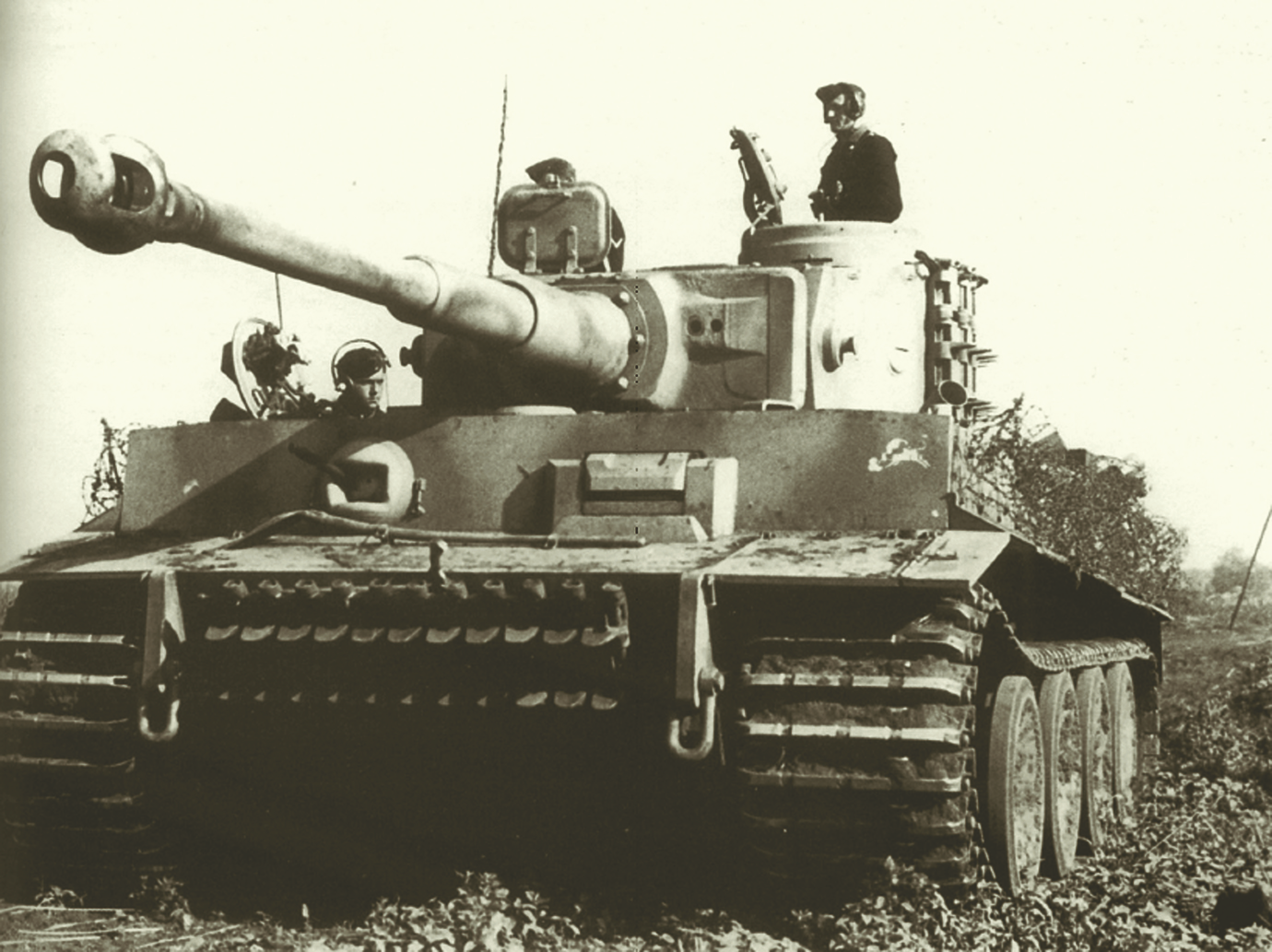
There can be little doubt that the Tiger 1 heavy tank is one of the most recognisable and iconic tanks of WWII. A source of fear to Allied tank crews, there were few armoured fighting vehicles to compete with a Tiger until the closing months of the war. Germany had begun work on a heavy tank prior to the outbreak of WWII, but the design process proved arduous, with constant changes and updates pushing back initial deliveries. Lessons from the fighting during the Battle of France led to further updates, including the up-gunning of the design with the superb KwK 36 L/56 88mm cannon, which proved extremely effective at destroying Allied tanks on both the Western and Eastern Fronts. However, the addition of the new main armament led to further changes to the Tiger’s design. It finally entered service at the end of 1942, a monster 54 tonnes (60 tons) with 100mm (3.9in) frontal armour, 60mm (2.4in) armour at the sides and 80mm (3.1in) at the turret sides and the rear armour. It was also surprisingly nimble, its Maybach HL230 P45 V-12 engine giving it a top road speed of over 45km/h (28mph). The Tiger’s arrival on the battlefields of Europe was a shock to the Allies. Even Russia’s vaunted T-34 had a hard time against one, while most British tanks, with their 2in guns, stood little chance. The arrival of the M4 Sherman in 1942, at last giving Britain and America a modern tank, was also now somewhat undermined. However, the Tiger 1 tended to fall foul of the problems that befell many of Nazi Germany’s tanks designed during the war. It was unduly complicated, very expensive to manufacture and prone to regular mechanical breakdowns. It was also rather thirsty, at a time when Germany was having a hard time keeping its armed forces supplied with the necessary fuel. As such, whilst a powerful adversary, only 1,300 Tigers were built, reducing its influence on the battlefields of WWII.
It has been said that of all the threats Britain faced during WWII, the U-boat menace was the one that Churchill feared the most. During the early years of the war, German submarines sank hundreds of thousands of tons of Allied shipping as the supply convoys struggled to cross the Atlantic. U-96 was part of the submarine fleet, becoming operational in September 1940. She was a Type VIIC, one of the most successful of U-boat designs which led to 568 being built during the war. U-96 was able to take part in the “Happy Times”, those periods when British, and later American, navies and merchant fleets were still struggling to come up with suitable tactics to combat the subs. However, as the Allies began to learn from bitter experience, the U-boat wolf packs found themselves increasingly on the defensive. Newer convoy-escorting warships began using better protective measures and were fitted with increasingly more sophisticated and accurate detection equipment and anti-submarine weapons, a result of the technological war being driven by the actual fighting. U-96 conducted 11 operational patrols, the last taking place during the Christmas period of 1942-43, the point when the Battle of the Atlantic was beginning to swing in favour of the Allies. The sub had accrued a tally of 27 ships sunk, all merchant vessels amounting to a combined weight of 181,206 gross registered tons, as well as damaging four others. With the completion of her eleventh mission, U-96 was to see out the rest of the war as a training vessel before being decommissioned on 15 February 1945. Had she continued patrolling, the odds of surviving would have been against her and her crew. Such was the success of Allied anti-submarine efforts that by the end of the war, the U-boats preferred to take their chances on the surface and duke it with the ever-increasing numbers of Allies aircraft hunting the subs. By the end of the war, the U-boat arm of the Kriegsmarine suffered proportionally heavier losses than any fighting arm amongst all the armed forces of WWII. By a twist of fate, having survived so long, U-96’s was finally sunk by a US bombing raid on 30 March 1945 while in dock at Wilhelmshaven.
It’s often thought that Britain’s armed forces were outdated and unprepared at the start of WWII. In some cases, this true but while the RAF was still flying some vintage biplane aircraft, it was also lucky enough to equipped with two outstanding modern monoplane fighters: the Hawker Hurricane and the Supermarine Spitfire. It’s not much of an exaggeration to say that the Spitfire was perhaps the best fighter in the world at the time it entered service in August 1938, just a year before the outbreak of WWII. By the time the war began, 187 were serving within 11 RAF fighter squadrons. The Spitfire was designed by Supermarine’s R.J. Mitchell, who had used his experience building high-speed racing seaplanes to refine the Spitfire’s design, which was powered by the superb Rolls-Royce Merlin engine (which also powered the Hurricane). Once in combat, the Spitfire quickly showed itself equal to the Luftwaffe’s finest, the Messerschmitt Bf 109, and went on to gain legendary status during the Battle of Britain. As the war progressed, the Spitfire and the Merlin underwent numerous updates and refinements, locked in a battle to maintain the aircraft’s superiority over its opponents. The “Spit” also took on other roles, flying as a fighter-bomber in the ground attack and close air support roles, while a specialised version also flew as a high-altitude photo-reconnaissance aircraft. A navalised version – the Seafire – was also adapted to fly from Royal Navy carriers. By the end of WWII, some 20,000 Spitfires had been built; they served in every theatre of war, even on the Eastern Front, although the Russians found the Spit rather too prissy for their tastes, preferring the more rugged Hurricane. By the end of the war, the Spit’s position as Greatest Fighter of WWII had been overtaken by not just superior piston-engined fighters but by the new generation of jets. However, the Spitfire still had not seen the end of war. When North Korea invaded its southern neighbour and ideological opponent on 25 June 1950, the UN forces mobilised to stop the communist invasion included Royal Navy carriers flying Seafires aboard HMS Triumph.
Along with her sistership, the Tirpitz, the battleship Bismarck was the pinnacle of Nazi Germany’s capital ship development, intended to break the stranglehold the Royal Navy had maintained for centuries. Fully loaded, the Bismarck weighed 41,700 tonnes (41,000 tons), had a top speed of 55.5km/h (34.5mph) and had a main armament of eight 38cm (15in) guns. Launched in February 1940, she seemed more than a match for the Royal Navy’s finest and when she was spotted heading out into the Atlantic on 16 May 1941, the Bismarck (joined by the heavy cruiser Prinz Eugen) caused much concern. The warships had been dispatched as the spearhead of Operation Rheinübung, an effort to disrupt British shipping in the North Atlantic. Fear of the Bismarck seemed well founded when, during the ship’s first encounter with Royal Navy warships on 24 May, a shell from the 38cm guns struck the ammunition magazine of battlecruiser HMS Hood. The resulting explosion killed all but three of the 1,419 men aboard. The loss of the Hood incensed the British, who now poured warships into the North Atlantic in hot pursuit of the German vessels. Amongst the British ships hunting the Bismarck were the carriers HMS Victorious and Ark Royal. Ordered back to port, the German warships were shadowed by enemy ships and aircraft and engaged in gunnery duels with Royal Navy warships while dodging air attacks launched from the British carriers. However, on the evening of 26 May, Bismarck, now alone after the Prinz Eugen went her separate way, was once again attacked by carrierborne aircraft. These were Fairey Swordfish from the Ark Royal. It would seem strange to think these archaic-looking fixed-wing biplanes – known as “stringbags” to their crews – could be a threat to a modern battleship, but a lucky torpedo strike crippled the Bismarck’s rudder, fixing it into a position so that all the battleship could do was perform a wide circle. By dawn on the 27th, the Royal Navy was closing in for the kill. The British battleships HMS King George V and Rodney, and the heavy cruisers Norfolk and Suffolk, surrounded the Bismarck. In a bombardment that lasted over an hour, during which the British battleships fired 700 shells from their main guns, the Bismarck was reduced to wreckage. The coup de grace was delivered by torpedoes fired from the cruiser HMS Dorsetshire. Only 114 members of Bismarck’s 2,200 crew survived. Thus ended Nazi Germany’s hopes of forcing the British from the North Atlantic. Instead, it fell to the U-boat of the Kriegsmarine to continue the fight.